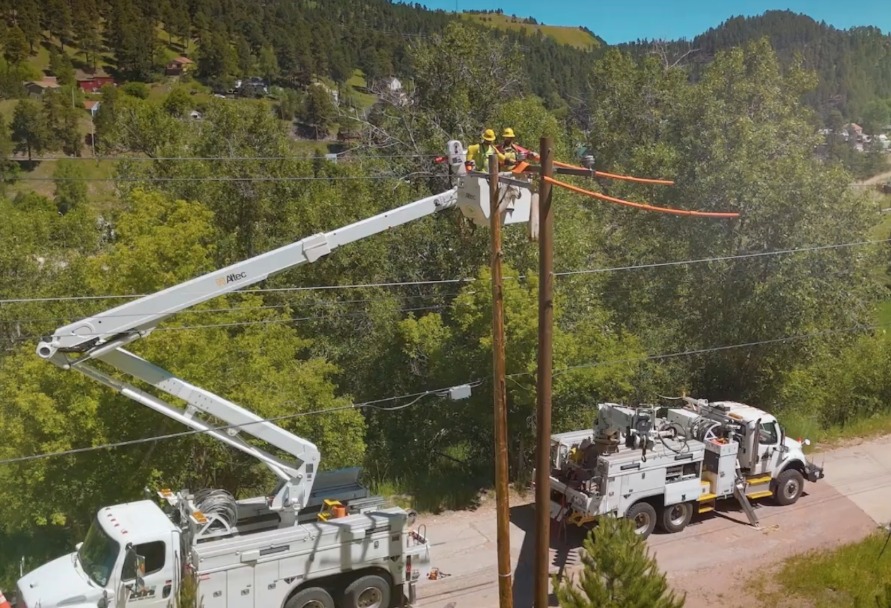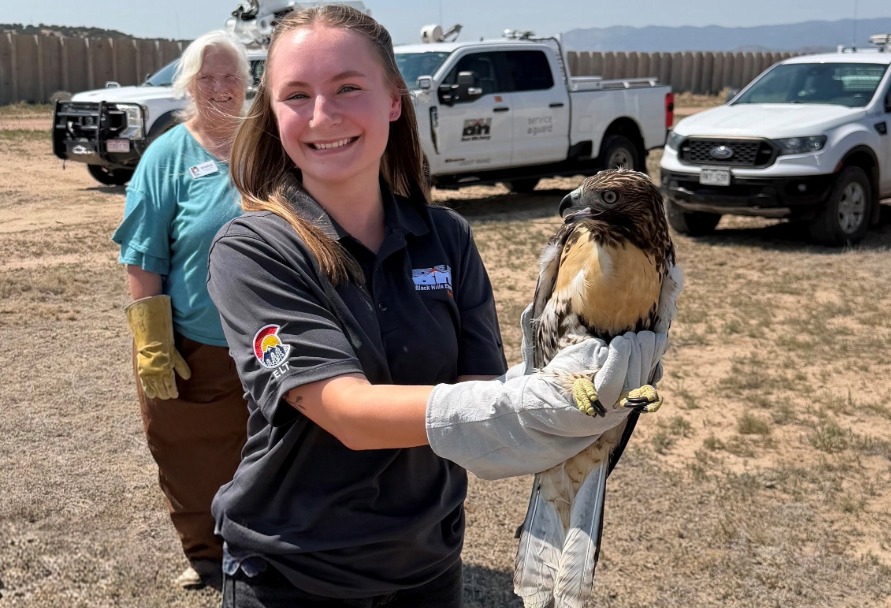
When Black Hills Energy crews arrived at a power pole near Penrose, Colorado, earlier this year, they discovered more than utility equipment. Tucked high above the ground was an active red-tailed hawk nest, home to several young birds of prey.
We share the landscapes where we operate with wildlife like hawks, and sometimes that presents challenges. The nest’s location near electrical equipment created a potential safety risk for the hawks and could have affected the reliability of electric service for customers.
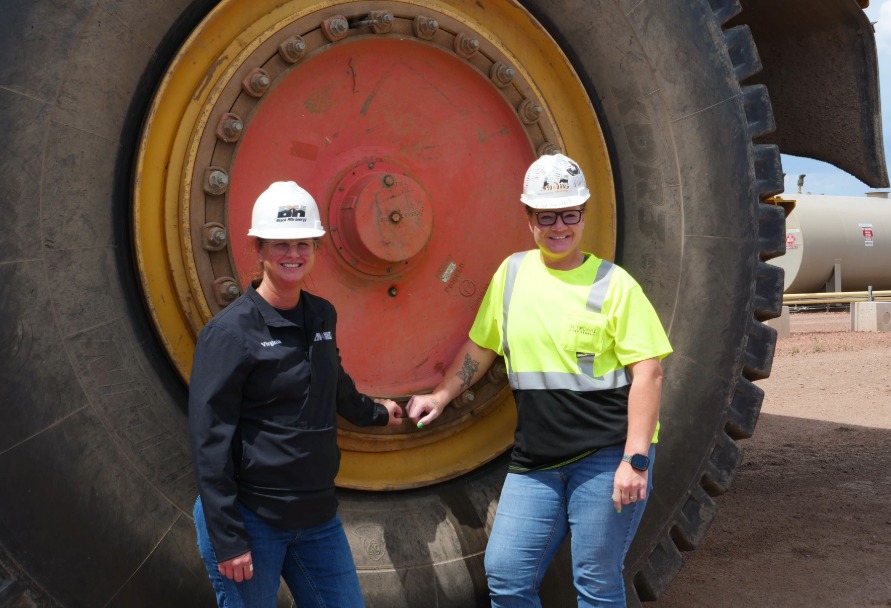
"Protecting wildlife while maintaining a safe and reliable electric system is an important part of our work," said Austin, a principal environmental professional at Black Hills Energy. "Partnerships with organizations like the NWDC Raptor Center and Second Chance Rehabilitators help ensure these birds receive expert care and have the opportunity to return to the wild."
The project began under Black Hills Energy's Special Purpose Utility, or SPUT, permit from the U.S. Fish and Wildlife Service. The permit allows the company to work with licensed wildlife rehabilitation organizations when utility work affects protected birds and their nests. Following established procedures, crews safely removed the nest and helped take the young hawks where they could receive appropriate care.
The birds were transferred to the Nature and Wildlife Discovery Center's Raptor Center in Pueblo, where wildlife experts took over. The facility, Southern Colorado's only raptor rehabilitation center, has spent decades rescuing, rehabilitating and releasing injured, ill and orphaned birds of prey.
Among the nest's occupants was a young hawk later named "Blue," after the blue identification band placed on her leg during rehabilitation.
For Blue, rehabilitation meant time to grow, strengthen and develop the skills she would need to survive on her own. Staff and volunteers at the NWDC Raptor Center monitored her progress and provided the specialized care she needed until she was healthy enough to return to the wild.
Our partnerships with local wildlife rehabilitation organizations, like the NWDC Raptor Center and Second Chance Wildlife Rehabilitation Center, provide an important opportunity to help wildlife. Together, the organizations help care for birds that are injured, orphaned or displaced, giving them the best possible opportunity for recovery and release.
After months of rehabilitation, Blue was ready to return to the wild. On Aug. 6, representatives from Black Hills Energy and wildlife professionals gathered near her original nesting territory. Just feet from where she had been rescued earlier in the year, Blue was released back into her natural habitat.
As the carrier opened and the young hawk spread her wings, she quickly took flight across the Southern Colorado landscape, bringing her journey nearly full circle.
For everyone involved, Blue’s release wasn’t just the successful rehabilitation of a single bird. It demonstrated what’s possible when organizations with different missions work toward a common goal.
"This release is an example of successful collaboration between utility companies and wildlife professionals," said Diana Miller, NWDC Raptor Center director. "When organizations work together, we can protect both wildlife and critical infrastructure while giving birds like Blue a second chance."
Red-tailed hawks often return to familiar nesting areas year after year. While nests are typically abandoned after young birds fledge each season, many hawks return to the same general territory during future breeding cycles. Recognizing that possibility, our crews took additional steps to create a safer place for future nesting activity.
After the young hawks were removed from the utility pole, crews installed a nesting platform near the original location and carefully transferred existing nesting materials to the new structure. The platform provides an alternative nesting site away from electrical equipment while encouraging hawks to remain in the area they already know.
This approach supports both wildlife protection and electric reliability. By providing a safer nesting location, we can help reduce future conflicts between nesting birds and our infrastructure while preserving habitat opportunities for local raptors.
Projects like Blue's rescue and release are part of our ongoing commitment to environmental stewardship across the communities we serve. Whether installing nesting platforms, coordinating with wildlife rehabilitation experts or following established conservation practices, employees regularly work to balance the needs of wildlife with the responsibility of delivering safe and reliable energy.
That balance often happens behind the scenes, but the outcome can be seen soaring overhead. For everyone who played a role in Blue’s recovery and release, her flight served as a reminder that protecting wildlife and powering communities can go hand in hand.
Read more Positive Energy